Imagine waking up one day to find yourself transformed into a human, but with those telltale Ditto eyes still giving you away. That's exactly how Pokémon Pokopia begins—you're a Ditto who's somehow become human after a long sleep, and the world around you has completely withered away. Professor Tangrowth, this weird plant-covered professor, finds you and asks for help rebuilding what was lost.
What follows is something completely different from any Pokémon game you've played before. No gyms, no battles to become champion, no saving the world from evil teams. Instead, you're building homes, planting crops, and convincing Pokémon to move into your growing paradise. It's cozy, it's creative, and honestly? It's pretty addictive.
What follows is something completely different from any Pokémon game you've played before. No gyms, no battles to become champion, no saving the world from evil teams. Instead, you're building homes, planting crops, and convincing Pokémon to move into your growing paradise. It's cozy, it's creative, and honestly? It's pretty addictive.
The Core Gameplay Loop That Keeps You Coming Back
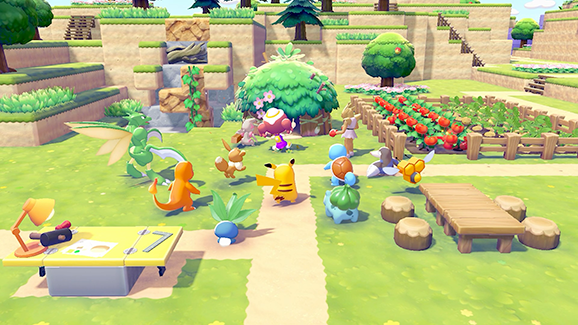
Here's how it actually works: you explore different areas of the island, each with its own biome and materials. You collect stuff like wood, stone, and berries using moves you learn from Pokémon friends. Want to chop down a tree? Befriend a Pikachu and learn Thunder Shock. Need to move heavy rocks? A Machamp might teach you Strength.
Once you've got materials, you start building. The construction is block-based like Minecraft, but with that charming Pokémon aesthetic. You're not just placing random blocks though—you're creating specific habitats to attract certain Pokémon types. Build a cozy forest area? Grass types will show up. Create a beach setup? Water Pokémon start visiting.
The cool part is how everything connects. Better habitats mean more Pokémon move in. More Pokémon means more skills to learn. More skills means you can explore further and build cooler stuff. Before you know it, five hours have passed and you've somehow created an entire village from nothing.
Once you've got materials, you start building. The construction is block-based like Minecraft, but with that charming Pokémon aesthetic. You're not just placing random blocks though—you're creating specific habitats to attract certain Pokémon types. Build a cozy forest area? Grass types will show up. Create a beach setup? Water Pokémon start visiting.
The cool part is how everything connects. Better habitats mean more Pokémon move in. More Pokémon means more skills to learn. More skills means you can explore further and build cooler stuff. Before you know it, five hours have passed and you've somehow created an entire village from nothing.
All Pokémon Confirmed So Far
The roster isn't as massive as a mainline game, but there's still plenty of variety. You've got your classics like Pikachu, Eevee, and the starters, but some unexpected picks too. Who expected to see Cherubi or Burmy in a life sim?
What's interesting is how each Pokémon has a specialty. Some are great at gathering materials, others excel at farming, and some are just there to look cute and boost your island's "comfort" rating. Smearguru, that new Smeargle variant, is particularly useful for learning crafting recipes.
Then there are the unique variants. Peakychu (a chubby Pikachu evolution), Mosslax (a moss-covered Snorlax), and even DJ Rotom who runs the island's radio station. These aren't just reskins either—they each have specific roles in the community and abilities that help with different tasks.
What's interesting is how each Pokémon has a specialty. Some are great at gathering materials, others excel at farming, and some are just there to look cute and boost your island's "comfort" rating. Smearguru, that new Smeargle variant, is particularly useful for learning crafting recipes.
Then there are the unique variants. Peakychu (a chubby Pikachu evolution), Mosslax (a moss-covered Snorlax), and even DJ Rotom who runs the island's radio station. These aren't just reskins either—they each have specific roles in the community and abilities that help with different tasks.
Building and Crafting: Where You'll Spend Most of Your Time
Let's be real, the building system is what makes Pokopia special. You've got tons of furniture, decorations, and structural pieces to work with. Houses, bridges, fences, flower beds—if you can imagine it, you can probably build it.
The crafting isn't just about slapping materials together either. Recipes unlock gradually as you progress, and some pretty cool stuff becomes available later in the game. Want a hot spring? That's endgame content. A greenhouse? Better have those biomes unlocked first.
What's neat is how the game guides you without holding your hand. Professor Tangrowth gives requests that nudge you in the right direction, but how you complete them is up to you. Need to build a house for a new Pokémon? Cool, but where you put it and what it looks like? That's your call.
The crafting isn't just about slapping materials together either. Recipes unlock gradually as you progress, and some pretty cool stuff becomes available later in the game. Want a hot spring? That's endgame content. A greenhouse? Better have those biomes unlocked first.
What's neat is how the game guides you without holding your hand. Professor Tangrowth gives requests that nudge you in the right direction, but how you complete them is up to you. Need to build a house for a new Pokémon? Cool, but where you put it and what it looks like? That's your call.
The Characters You'll Meet Along the Way
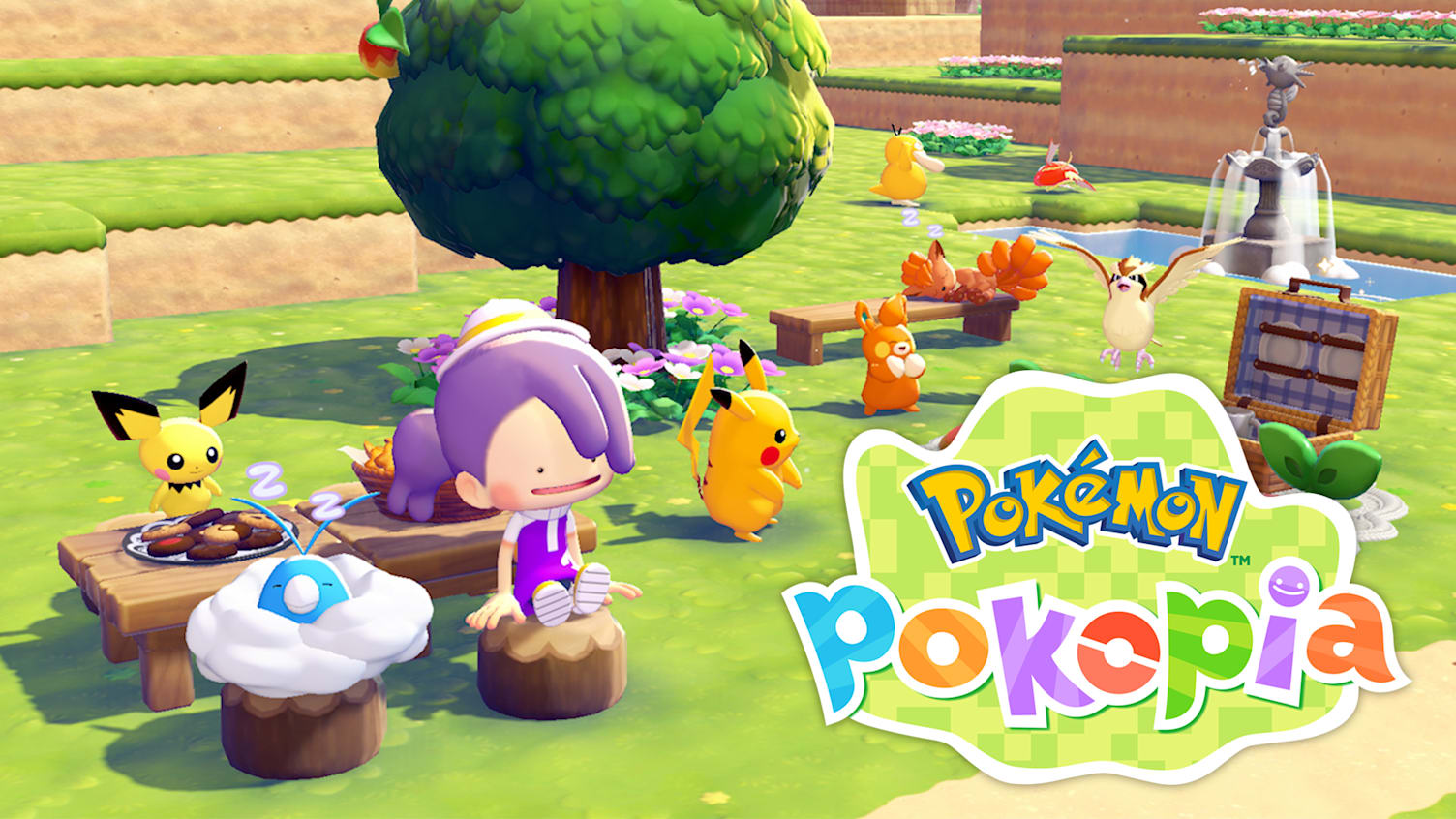
Professor Tangrowth is just the start. There's a whole cast of NPCs who make your island feel alive. Peakychu runs the general store, Mosslax handles construction projects, and Smearguru teaches you new crafting techniques. Each has their own personality and little storylines that unfold as you play.
The character customization deserves a mention too. Remember how your Ditto has those distinctive eyes? You can actually customize your appearance quite a bit—clothes, accessories, even different Ditto-like features. It's not Animal Crossing levels of customization, but there's enough to make your character feel unique.
The character customization deserves a mention too. Remember how your Ditto has those distinctive eyes? You can actually customize your appearance quite a bit—clothes, accessories, even different Ditto-like features. It's not Animal Crossing levels of customization, but there's enough to make your character feel unique.
Multiplayer and What Comes Next
The game supports up to four players online, which is where things get really fun. You can visit friends' islands, work on building projects together, or just hang out and show off your creations. There's also GameShare, letting you play with one copy across multiple Switch 2 consoles—though Nintendo's decision to make this a game-key card only title has some players pretty annoyed.
As for DLC? Nothing official yet, but the way the game is structured, expansions seem inevitable. New biomes, new Pokémon, new building sets—it's all low-hanging fruit for future updates. The game releases March 5, 2026, exclusively on Switch 2 for $69.99, so we'll see what post-launch support looks like soon enough.
As for DLC? Nothing official yet, but the way the game is structured, expansions seem inevitable. New biomes, new Pokémon, new building sets—it's all low-hanging fruit for future updates. The game releases March 5, 2026, exclusively on Switch 2 for $69.99, so we'll see what post-launch support looks like soon enough.
Pokémon Pokopia isn't trying to be the next mainline game, and that's exactly what makes it work. It's a chill, creative experience that lets you step back from the competitive aspect of Pokémon and just build something cool with your favorite creatures. The building is deep enough to keep you engaged, the Pokémon variety keeps things fresh, and there's something genuinely satisfying about transforming a barren island into a bustling paradise. Whether you're in for 20 minutes or 4 hours, Pokopia has a way of making you feel like you've actually accomplished something.